Gavin Newsom Calls for National Billionaire Tax While Opposing California Wealth Tax
California Governor Gavin Newsom has launched his boldest national economic proposal yet, calling for a federal tax on America’s wealthiest individuals just one day after a California billionaire tax measure advanced to the November ballot despite his opposition. The move positions Newsom at the center of a growing debate over wealth inequality while fueling speculation about a future White House campaign.
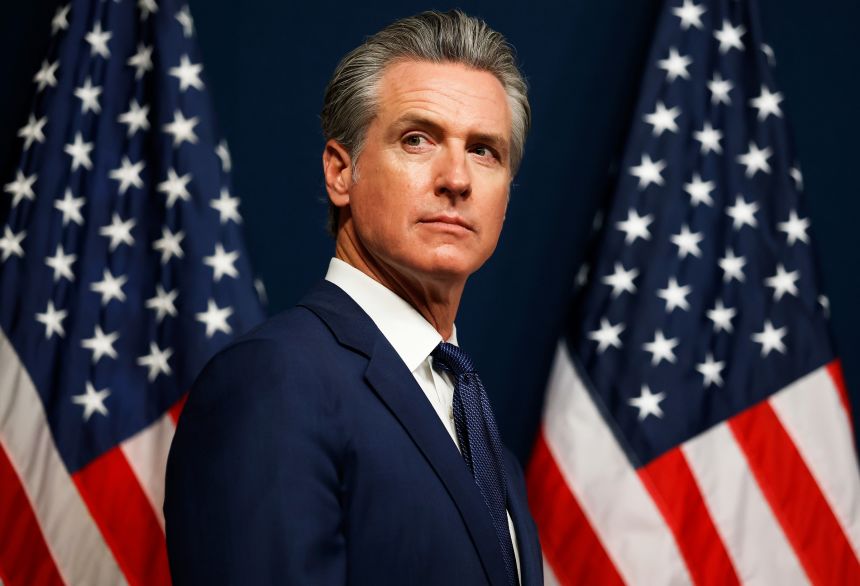
California Governor Gavin Newsom has unveiled what may be the clearest indication yet of the economic platform he intends to carry onto the national stage: a federal tax targeting America’s ultra-wealthy.
Writing on his Substack Friday, Newsom declared, “It’s time for an economic reset in America,” arguing that the country’s tax system increasingly favors billionaires while leaving working families to shoulder a disproportionate burden.
The announcement comes as the governor is widely viewed as laying the groundwork for a likely 2028 presidential campaign.
“The Fight Belongs at the Federal Level”
Newsom’s proposal landed just one day after California officials confirmed that a controversial state wealth tax initiative will appear on the November ballot.
The measure would impose a one-time tax on California billionaires to fund healthcare programs, but Newsom has made clear he intends to vote against it. (AP News)
“It’s time for an economic reset in America.” – Gavin Newsom
Rather than embracing a state-by-state approach, the governor argues that taxing extraordinary wealth only works if implemented nationally.
In his essay, Newsom proposes a federal minimum tax on individuals worth more than $100 million, restoring higher corporate tax rates that existed before the 2017 federal tax overhaul, closing loopholes that allow wealthy investors to borrow against appreciated assets without paying taxes, and reforming inheritance laws that he says perpetuate concentrated wealth across generations.
“The fight belongs at the federal level, where this broken system was created in the first place.” – – Gavin Newsom
A Delicate Political Balance
Newsom’s position has exposed him to criticism from both sides of the debate.
Supporters of California’s ballot initiative question why the governor backs taxing billionaires nationally while opposing a similar effort in his own state.
Newsom counters that California acting alone could encourage wealthy residents to relocate, ultimately shrinking the state’s tax base without solving the broader problem of wealth concentration.
His argument reflects a longstanding concern among economists and policymakers that individual states face greater challenges in enforcing wealth taxes than the federal government, where taxpayers cannot simply move across state lines to avoid higher levies.
What It Means for San Francisco
For San Francisco, the debate carries particular significance.
The Bay Area remains home to one of the world’s largest concentrations of billionaires, venture capital investors and technology founders.
Any national effort to increase taxes on ultra-high-net-worth individuals would directly affect many of the region’s most influential business leaders while potentially reshaping conversations around startup investing, capital gains, philanthropy and corporate growth.
At the same time, Newsom is attempting to reassure California’s innovation economy by arguing that national tax reform would create a level playing field rather than placing Silicon Valley at a competitive disadvantage against lower-tax states.
The governor also paired his tax proposal with a broader vision that includes a federal public equity fund tied to artificial intelligence, arguing that Americans should share in the wealth created by the AI revolution rather than seeing its gains concentrated among a handful of companies and investors.
Looking Toward 2028
Whether Congress has any appetite for a federal billionaire tax remains uncertain. Previous proposals have struggled to gain sufficient support, and constitutional as well as political questions continue to surround wealth taxation.
Even so, Newsom’s announcement represents his most assertive national economic message to date.
By framing wealth inequality as a defining issue for the country’s future, the California governor is increasingly positioning himself as a leading Democratic voice ahead of what many expect to be a highly competitive 2028 presidential race.