The Return of Doorstep Politics: Why San Francisco Voters Rewarded Ground Games Over Social Media
San Francisco’s latest political victories suggest that the age of the “Twitter candidate” may be fading. Across ideological lines, campaigns built on neighborhood relationships, face-to-face conversations, and years of community engagement are proving more powerful than viral moments or online outrage.
In a city that helped build the digital age, the old-fashioned art of knocking on doors may have become the most powerful political technology of all.
By Elizabeth Goretti
There was a time when political strategists believed that the future of campaigning lived online. The candidate with the sharpest social media presence, the most viral video, or the biggest stack of digital ads was supposed to have the upper hand. But if San Francisco’s latest political victories tell us anything, it is that the internet has limits, and neighborhoods still matter.
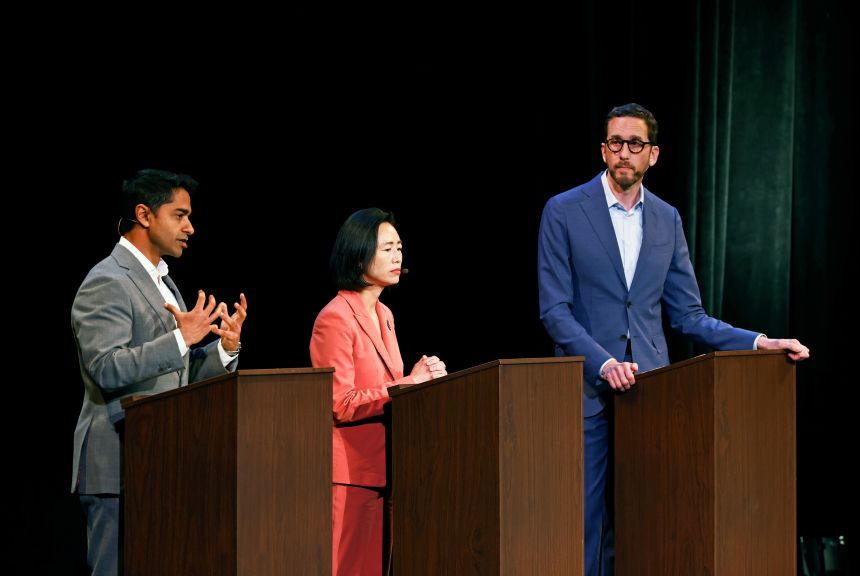
The recent successes of Scott Wiener and Connie Chan are fascinating not because they represent identical politics. In many ways, they do not. They appeal to different coalitions, prioritize different issues, and often occupy different corners of the city’s ideological map. Yet they share one remarkably effective campaign style: they invested heavily in being physically present.
They showed up.
At community meetings. At merchant association events. At neighborhood festivals. On sidewalks and doorsteps. They built relationships over years rather than weeks and relied on networks of volunteers, local advocates, and civic organizations that cannot be replicated by a trending hashtag.
That should force us to reconsider a common assumption about modern politics; visibility online automatically translates into support at the ballot box.
It doesn’t.
In fact, San Francisco may be proving the opposite. The more fragmented our digital lives become, the more valuable face-to-face interactions appear. Voters overwhelmed by endless online outrage seem increasingly willing to reward candidates who can discuss the broken streetlight on their block, the empty storefront down the road, or the bus that never arrives on time.
Social media is excellent at generating attention. It is much less effective at generating trust.
And trust is ultimately what local elections are about.
“Social media is excellent at generating attention. It is much less effective at generating trust.”
The irony is hard to ignore. San Francisco, home to many of the world’s most influential technology companies, may also be one of the first cities to reveal the limitations of digital-first politics. The platforms that dominate national conversations often flatten local issues into ideological battles, while residents continue to live in neighborhoods with very practical concerns: housing costs, public safety, transit reliability, school quality, and the future character of their communities.
A candidate may dominate an online debate for a day. But a candidate who spends years attending neighborhood meetings creates something far more durable.
Reputation.
The old political machine has been replaced not by algorithms, but by what could be called civic infrastructure. Tenant groups, parent associations, labor unions, small business networks, cultural organizations, and local advocates continue to shape elections because they create real-world relationships. They provide the one thing social media cannot: accountability. If a politician promises something at a community forum, chances are they will be reminded of it the next time they show up.
That dynamic helps explain why disciplined ground games continue to outperform digital celebrity. A thousand likes cannot compete with one trusted conversation between neighbors.
“A thousand likes cannot compete with one trusted conversation between neighbors.”
This is not to dismiss the role of online campaigning. Social media remains a valuable tool for fundraising, organizing, and reaching younger audiences. But it works best as an amplifier and not as a substitute for genuine community engagement.
Perhaps the most significant lesson from these recent campaigns is that San Francisco voters seem less interested in political performance than political presence. They are rewarding candidates who appear to understand that cities are not abstract ideological projects. They are collections of streets, businesses, schools, parks, and people who want to know that someone is listening.
“In a city saturated with digital noise, the most persuasive message may still be delivered face to face.”
For years, politics has borrowed the language of Silicon Valley. Campaigns were supposed to “disrupt,” “scale,” and “go viral.” But perhaps local democracy was never meant to function like a startup.
Maybe it functions more like a neighborhood café. The regulars know one another. Conversations build over time. Trust is earned slowly. Reputation matters. And if you stop showing up, people notice.
In the end, the real innovation in San Francisco politics may not be a new app or a better algorithm. It may simply be the rediscovery of one of democracy’s oldest ideas: knock on the door, introduce yourself, and ask people what they need.
Because in a city saturated with digital noise, the most persuasive message may still be delivered face to face.