How Museum Art Heists Are Changing the Visitor Experience
Brazen art heists are forcing museums to remove treasures, strengthen security and rethink exhibitions. But what happens when protecting art limits public access to it?
Opinion | San Francisco Radar
Art theft is no longer just a problem for museum directors, insurers and police. As priceless treasures disappear, visitors are paying the price through missing masterpieces, tighter security and a diminishing sense of intimacy with the art they came to see.
There was a time when visiting a museum meant stepping into another world. You could stand before a centuries-old painting, admire the craftsmanship of an ancient gold necklace or contemplate an object that had survived empires, wars and generations of human history.
Today, that experience is changing. And the thieves responsible are taking more than art.
Across Europe, a series of brazen museum robberies has forced cultural institutions to reconsider how they protect their collections without turning public galleries into fortresses. The consequences are already visible: valuable objects removed from display, exhibitions redesigned around replicas and visitors discovering that the treasures they travelled thousands of miles to see are no longer there.
The question is no longer simply whether museums can protect their collections. It is whether they can do so without sacrificing the very experience that makes them worth visiting.
When even the Louvre is vulnerable
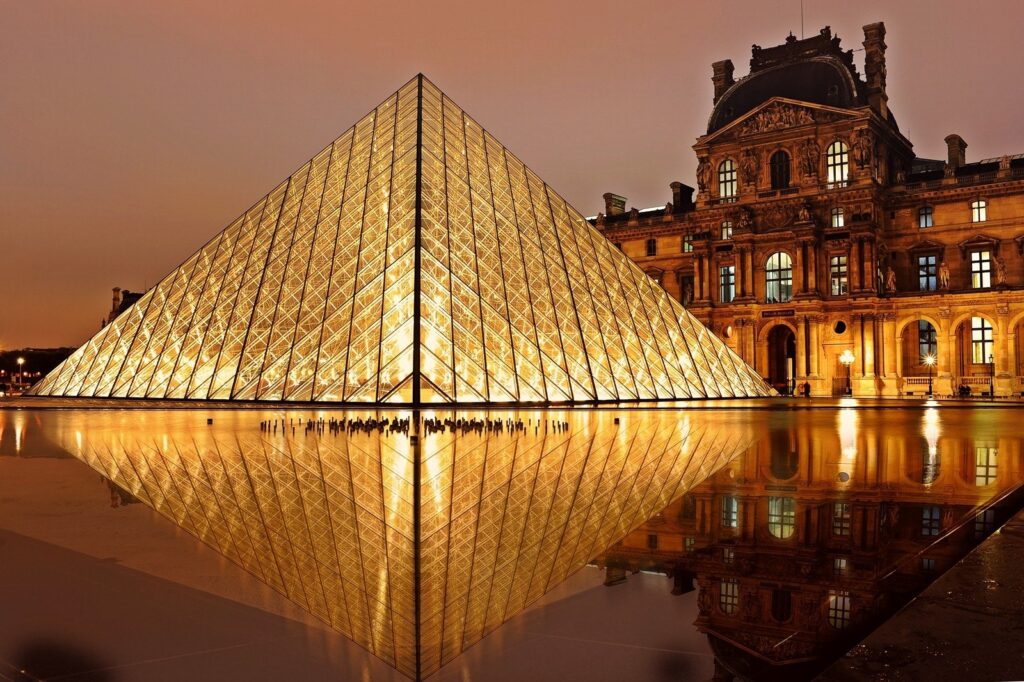
The theft of French crown jewels from Paris’s Louvre Museum in October 2025 delivered a particularly uncomfortable message: even the world’s most famous museums are vulnerable.
Thieves escaped with jewels valued at approximately €88 million in a robbery that took minutes. When the Louvre’s Galerie d’Apollon reopened in July 2026, the room’s magnificent architecture remained, but the crown jewels were absent. The stolen pieces had not been recovered, and surviving gemstones were being kept elsewhere while the museum considered how to display them more securely.
The Louvre was not alone. In August 2026, thieves stole nearly 10 kilograms of gold objects from the Museum of Villena in Spain. Days later, a burglary at the Renoir Museum in southern France resulted in four paintings being taken; two were subsequently abandoned nearby, while two remained missing in contemporary reports. Another theft targeted a 2,500-year-old gold torque in Burgundy.
Europol warned in August that museum robberies across Europe were becoming more violent, with criminals using tools such as sledgehammers and axes, and in some cases explosives and firearms.
These are not merely insurance claims or unfortunate headlines. They represent a growing challenge for institutions entrusted with preserving humanity’s cultural inheritance.
And for visitors, they raise a troubling question: if a museum cannot reliably protect its most celebrated objects, what happens to the public’s relationship with its collections?
The visitor loses something money cannot replace
The immediate loss of a stolen artwork is obvious. The less visible loss is the experience that disappears with it.
People do not always travel to a museum simply to look at a beautiful object. They travel to encounter the original. A painting may have been admired in books, studied in classrooms or reproduced thousands of times online, but standing before the actual work offers something different.
The brushstrokes, the texture, the scale and the physical presence of the object create a connection that a photograph cannot fully reproduce.
Consider an ancient gold ornament discovered in a burial chamber or a painting created by a celebrated artist centuries ago. These objects are valuable partly because of their materials and rarity, but their significance extends beyond their market price. They connect contemporary visitors with people who lived in radically different worlds.
When an original disappears, that connection becomes harder to experience.
Museums may display photographs, digital reconstructions or replicas. These can be educational and visually impressive. But they cannot always reproduce the feeling of standing before an authentic object that has survived thousands of years.
The distinction matters, particularly for smaller museums. At the Louvre, an absent collection can be surrounded by thousands of other works. At a regional museum, a single stolen artefact may be the centrepiece of an entire institution, closely tied to the history and identity of its community.
A missing treasure can therefore diminish not just an exhibition, but a destination.
Are museums becoming too secure to enjoy?
Security is necessary. No reasonable visitor expects museums to leave priceless objects unprotected, and no responsible director should ignore a credible threat.
Yet there is a delicate balance between protecting art and making it accessible.
As museums strengthen their defences, visitors may encounter more barriers, more restrictive display cases, greater distances between themselves and the objects, and increased surveillance. Some original works may disappear from public view altogether.
Each measure can make sense individually. Collectively, however, they risk changing the atmosphere of museums.
The best galleries invite curiosity. They allow visitors to slow down, move closer, notice details and develop their own interpretations. When every object feels inaccessible, the experience can become less intimate and more transactional.
Visitors may still enter the building, purchase a ticket and follow the exhibition route. But the emotional experience of discovery can be weakened.
There is also a financial consequence. Travellers often plan entire trips around a particular collection or landmark. If the principal attraction is missing, visitors may reasonably question whether the journey is worth the expense.
Museums should not assume that audiences will remain indifferent to the difference between seeing an original and seeing a substitute.
Replicas are a solution, not a complete replacement
Replicas deserve a place in the discussion. They can protect fragile objects, make exhibitions more accessible and allow important works to be displayed in places where the originals cannot safely travel.
They can also provide an opportunity to tell a deeper story about an artefact’s creation, discovery and historical significance.
But transparency is essential.
If visitors purchase tickets expecting to see an original and discover that a replica has quietly taken its place, the institution risks damaging trust. If the museum clearly explains why the original has been moved, what is known about its history and how the replica was produced, the substitute can still offer an engaging educational experience.
The difference lies in honesty.
Museums should clearly identify reproductions, explain why originals are absent and offer visitors meaningful information about the missing works. Digital displays, archival photographs and recorded expert commentary can help people understand what they are not seeing.
A replica can tell a valuable story. It should not be presented as though it resolves every loss caused by theft.
The real problem extends beyond museum walls
It is tempting to treat art theft as a security failure inside a particular building. But the problem also involves the markets that reward stolen cultural objects.
Precious metals and gemstones can be attractive targets because they possess material value beyond their cultural significance. Europol’s 2026 assessment highlighted criminal interest in high-value objects and the challenges created by illicit resale networks.
This creates an uncomfortable reality: an object that belongs to the public may be treated by criminals as a commodity to be stripped of its history and converted into cash.
A gold artefact that has survived millennia can potentially be melted down. A jewel can be dismantled. An artwork can be hidden from view, moved through illicit networks or held for years beyond the reach of investigators.
Once destroyed or irreversibly altered, the historical information embodied in an object may be lost forever.
That is why museums cannot solve the problem through display cases and surveillance cameras alone. Stronger security must be accompanied by international cooperation, effective investigations, reliable documentation of collections and serious efforts to disrupt the illegal trade in cultural property.
Museums also need sufficient funding to protect their collections without diverting every available resource away from exhibitions, conservation, education and public programmes.
Museums belong to the public
There is a danger that repeated thefts could lead institutions to adopt a defensive philosophy: display less, restrict access and keep the most valuable objects out of sight.
That may be necessary in specific cases. But if it becomes the default response, the public ultimately loses access to the very heritage museums exist to preserve and share.
Museums are not private vaults. Their purpose is not merely to keep objects safe behind locked doors. They educate, inspire, challenge assumptions and give people a tangible connection to the past.
Their openness is a strength, even if it also creates security challenges.
The answer cannot be to pretend that security risks do not exist. Nor should every visitor be treated as a potential threat. Instead, museums need thoughtful security planning that protects collections while preserving a welcoming environment.
Institutions can invest in better monitoring, improve staff training, strengthen emergency procedures, coordinate with law enforcement and assess which objects require additional protection. They can also communicate openly with visitors when security decisions affect what is on display.
The aim should be resilience, not retreat.
The cost of a stolen masterpiece is bigger than its price
Art theft is often reported in terms of financial value: millions of euros in stolen jewels, paintings worth a fortune or gold measured by weight.
These figures attract attention, but they tell only part of the story.
A museum object may carry centuries of craftsmanship, cultural memory and historical evidence. Its significance cannot necessarily be restored by an insurance payment, and its loss cannot always be remedied by purchasing another artwork.
There is also a broader public cost. When people lose access to original works, future generations inherit a diminished opportunity to encounter the past directly.
That should concern anyone who believes cultural institutions have a role in shaping an informed, imaginative and historically aware society.
The challenge facing museums is therefore not simply to prevent the next spectacular robbery. It is to ensure that security measures do not gradually deprive the public of meaningful access to its own cultural inheritance.
The greatest victory for art thieves would not be stealing a priceless object. It would be forcing museums to become places where the public can no longer experience their treasures.
Protecting art must mean more than keeping it from criminals. It must also mean keeping it accessible to the people for whom it was preserved in the first place.