San Franciscans Still Want Police Drones and Live Cameras – Even After the Surveillance Leak
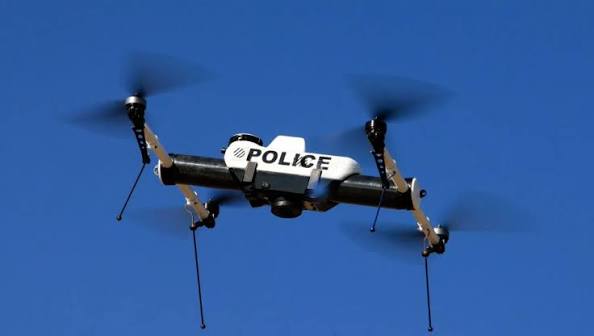
A new poll suggests San Francisco voters are becoming more comfortable with police surveillance technology, raising a bigger question: has public safety finally outweighed privacy concerns?
San Francisco has long been one of the American cities most skeptical of aggressive policing and government surveillance. But public opinion appears to be shifting.
Even after a major leak exposed live San Francisco Police Department drone footage online, a new poll suggests that a substantial majority of San Francisco voters still support giving police access to drones and live camera technology during active investigations.
The finding is striking because the leak offered residents an unusually intimate look at what modern police surveillance actually looks like.
In July, WIRED reported that an improperly secured web link had exposed live feeds from five SFPD drones.
The feeds included color and thermal imagery, as well as information that could reveal the location of police operations. Security researchers were able to view and record hours of footage before the link was taken down. WIRED
Yet rather than triggering a broad rejection of surveillance technology, the episode appears to have landed in a city where many residents increasingly see these tools as useful.
72% back police use during active investigations
A recent San Francisco poll conducted by FM3 Research for GrowSF found that 72% of voters support police using surveillance technology such as drones and live cameras during active investigations. SFGATE
That represents a significant change from the political environment that existed only a few years ago.
San Francisco voters approved Proposition E in 2024, loosening some of the city’s restrictions around police surveillance technology. Since then, SFPD has expanded its use of drones and integrated them with its Real-Time Investigation Center.
The department says these tools are intended to give officers information faster, particularly when a crime is happening in real time.
SFPD has previously said its Real-Time Investigation Center has assisted with more than 500 arrests and that technologies including drones, automated license plate readers and public-safety cameras have helped officers respond to crimes, locate suspects and mitigate pursuits. San Francisco Police Department
For residents who have watched San Francisco struggle with car break-ins, retail theft, public drug use and other quality-of-life problems, the appeal is straightforward.
If a camera or drone can help police find a suspect in minutes instead of hours, many residents appear willing to accept the trade-off.
“The debate is no longer simply surveillance versus privacy. For many San Franciscans, it is surveillance versus the feeling that nobody is watching.”
The drone leak changed the conversation
The recent leak nevertheless exposed a problem that privacy advocates have warned about for years: surveillance technology can be powerful, but the systems surrounding it are only as secure as their weakest link.
The leaked SFPD feeds reportedly showed police tracking people and vehicles, conducting searches and responding to incidents. The existence of thermal imaging also demonstrated how much more information a drone can gather than a conventional street camera.
The concern wasn’t necessarily that police had drones.
It was that footage from those drones ended up accessible on the open internet.
That distinction matters.
A resident can reasonably support a police officer using a drone to locate an armed suspect while simultaneously believing that the public should never be able to watch that operation online.
In other words, support for police technology does not automatically mean support for weak data security.
That may be the most important lesson from the poll.
San Francisco may be entering a new policing era
SFPD’s use of drones is growing rapidly. According to the San Francisco Chronicle, the department recorded 3,558 drone deployments during the first five months of 2026. This is more than the total number recorded during all of 2025. May alone saw 776 deployments.
That scale changes the conversation.
Drones are no longer an occasional specialty tool. They are becoming part of the everyday infrastructure of policing.
The same is true of cameras.
San Francisco increasingly has the technological ability to connect information from different sources; drones, fixed cameras, automated license plate readers and other systems to give officers a much faster picture of what is happening on the ground.
For residents who want a police department capable of responding quickly, that can look less like dystopian surveillance and more like basic modernization.
And that distinction may explain why public opinion is moving.
The privacy question isn’t going away
The growing support for surveillance technology shouldn’t be interpreted as a blank check for police.
The American Civil Liberties Union, which has criticized the expansion of police drone programs, argues that the technology creates significant privacy concerns and that its effectiveness should be independently evaluated. (American Civil Liberties Union)
Those concerns become particularly important when drones capture people who aren’t involved in a crime.
A drone responding to a burglary might also record neighbors, pedestrians, apartment buildings, vehicles and people going about their daily lives.
The question San Francisco now faces is therefore not simply whether police should have drones.
It is where the boundaries should be.
How long should footage be retained? Who can access it? When can officers use thermal imaging? Can footage be shared with other agencies? What happens when a drone records someone who has nothing to do with an investigation? And what penalties should exist when police technology is improperly secured?
Those are questions residents are likely to care about even if they support the technology itself.
The SF Radar view: San Franciscans may be more pragmatic than ideological
San Francisco’s relationship with policing has changed.
The city remains deeply concerned about civil liberties.
But after years of frustration over crime and public disorder, residents also appear increasingly willing to consider tools that might make policing faster and more effective.
The 72% figure is significant precisely because it suggests that the old assumption that San Francisco voters will instinctively reject expanded police surveillance may no longer hold.
Residents may be making a more pragmatic calculation:
If the technology is tightly controlled, securely operated and used for legitimate investigations, the benefits may be worth it.
That doesn’t mean San Franciscans want to live under constant surveillance.
It means many appear to want police to have the tools necessary to respond when something actually happens.
The drone leak should therefore prompt a demand for better safeguards, not necessarily fewer tools.
San Francisco can have both.
It can expect police to use modern technology to protect residents and demand that the technology be operated with modern standards of security, accountability and transparency.
The real test now is whether City Hall and SFPD can earn enough public trust to make that balance work.
Because if San Franciscans are increasingly saying yes to police drones, cameras and real-time intelligence, the next question is unavoidable:
Who is watching the watchers?