America’s Political Divide Is Showing Up in Its Health Outcomes
A new Nature Human Behaviour study finds that conservative Americans experienced worsening health and higher mortality than liberal peers during the 2010s and early 2020s. Researchers say political realignment explains part of the gap, while declining trust in doctors and medical advice may also be contributing.
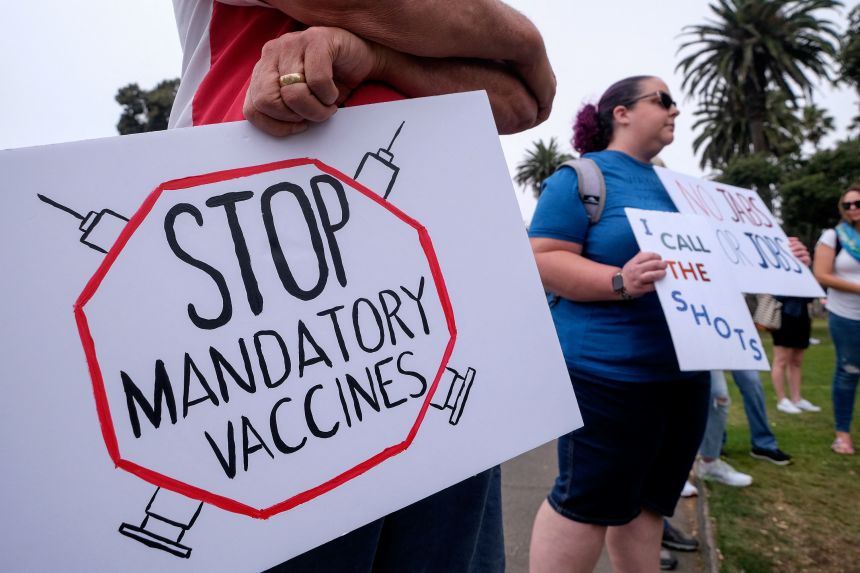
A new Nature Human Behaviour study finds that conservatives in the U.S. have experienced worsening health and higher mortality than liberal peers, raising questions about whether political identity has become a new social determinant of health.
By San Francisco Radar
America’s political divide may be doing more than shaping elections, public policy and social relationships.
New research suggests it may also be increasingly reflected in something far more personal: who gets sick, who seeks medical care and who dies earlier.
A study published in Nature Human Behaviour finds that Americans identifying as conservative experienced worsening health during the 2010s and higher mortality in the early 2020s compared with their liberal counterparts.
The researchers say the widening divide cannot be explained entirely by differences in demographics, income, education, insurance coverage, geography, public policy or COVID-19.
The study, by Elizabeth Elder of Stanford University’s Hoover Institution and Neil A. O’Brian of the University of North Carolina at Chapel Hill, was published May 14, 2026.
It draws on individual-level medical information and death records from the National Longitudinal Study of Adolescent to Adult Health, following a nationally representative group of Americans who were adolescents in the 1990s.
“Political beliefs…have become an important social determinant of health.”
That conclusion could prove especially consequential as Americans become increasingly divided over institutions that once occupied a relatively nonpartisan space, including doctors, hospitals, pharmaceutical companies and public-health authorities.
A Health Gap That Wasn’t Always There
The researchers found little discernible relationship between political ideology and several measured health indicators in 2008–2009.
By the 2010s, however, conservative participants in the study were becoming less healthy than liberal peers.
The health analysis looked at five biomarkers, including body mass, blood pressure, cholesterol, blood glucose and C-reactive protein, a marker associated with inflammation.
The researchers found that roughly half of the emerging health gap could be attributed to political realignment.
People moving between ideological camps, with newer conservative entrants tending to be less healthy.
But that was only part of the story.
People who were already liberal or conservative also increasingly diverged in their health over time.
Differences in education, income and insurance status explained some of the change, but did not account for the entire gap.
The Mortality Difference Became More Visible After 2020
The study’s mortality findings are particularly striking.
In earlier periods, liberals either had similar or somewhat higher mortality rates than conservatives, although those differences were generally not statistically significant.
By 2020–2022, however, conservative respondents were significantly more likely to have died.
For the most conservative participants, the researchers estimated a mortality probability roughly 1.14 percentage points higher than for the most liberal participants during 2020–2022.
The difference was increasingly associated with deaths from internal causes, including cancer, heart disease and diabetes rather than deaths from external causes such as accidents or overdoses.
The researchers found that the political-health divide was not simply a story about where Americans lived. Even conservatives and liberals living in the same county showed different health outcomes.
That finding complicates a familiar explanation of America’s health divide: that red states simply have different healthcare policies, economic conditions or access to medical services than blue states.
Those factors matter. But the researchers argue they do not appear to explain the entire difference.
Trust in Doctors May Be Part of the Story
Perhaps the most provocative element of the research concerns trust.
The researchers conducted a separate 2024 survey of 21,751 U.S. adults to examine attitudes toward healthcare.
Among respondents, 38% reported having at least one of five chronic conditions: high cholesterol, high blood pressure, cardiovascular disease, type 2 diabetes or chronic obstructive pulmonary disease.
The survey examined whether people visited doctors, trusted their primary-care or emergency-room physicians, followed medical recommendations and believed medications for chronic conditions were safe and effective.
The results were consistent with a broader ideological divide in healthcare engagement.
Right-leaning Americans were more skeptical of medical professionals and less inclined toward some forms of medical engagement and adherence.
Importantly, however, the authors do not claim to have established that political ideology causes poorer health.
The study’s health and mortality findings are descriptive, and the researchers acknowledge that their survey measuring trust in medicine was conducted after the Add Health medical data were collected.
That means the research cannot definitively prove that declining trust caused the deterioration in health.
This distinction matters.
Correlation is not causation, and political ideology itself may be standing in for a complicated combination of social, economic, cultural and behavioral factors.
COVID-19 Was Important but Not the Whole Explanation
The timing inevitably raises another question: how much of the divide can be attributed to COVID-19?
The pandemic clearly intensified political disagreements about vaccines, masks, public-health restrictions and medical expertise. Previous research has also documented higher COVID-19 mortality among Republicans, particularly after vaccines became widely available.
But Elder and O’Brian found evidence that the political-health divide was developing before the pandemic and was not limited to COVID-related deaths.
Conservative Americans had already begun showing worsening health during the 2010s.
By 2020–2022, the mortality difference had become more pronounced, including deaths from diseases unrelated to COVID-19.
“The health divide may be becoming a political divide—and the consequences could last well beyond any single election cycle.”
Why This Matters Beyond Red States and Blue States
For public-health officials, the implications are uncomfortable.
Healthcare traditionally assumes that patients can be persuaded by evidence, professional expertise and a clear explanation of risk.
But if political identity increasingly influences whether people trust doctors, take medications, attend appointments or follow treatment recommendations, then political polarization itself becomes a public-health challenge.
That could make conventional health campaigns less effective.
It also raises a difficult question for doctors: how do you reach patients who may distrust the institutions delivering the advice?
The researchers warn that if the trend continues, public-health officials and medical professionals could find it increasingly difficult to reach right-leaning Americans, even when the health issue has nothing to do with politics or COVID-19.
A Warning for an Increasingly Polarized America
The study does not suggest that conservatives are inherently less healthy, nor that liberals are inherently healthier.
Instead, it documents a relatively recent divergence and attempts to understand why it has emerged.
That distinction is important because political coalitions themselves are changing.
Americans who identify as conservative today are not necessarily demographically or socially identical to conservatives of previous generations.
Still, the researchers’ broader argument is difficult to ignore: political identity may now influence health not only through laws and public policy, but through everyday decisions about whom to trust and whether to seek care.
For a country already struggling with healthcare costs, chronic disease and declining trust in institutions, that could become another fault line Americans cannot afford to ignore.
The researchers ultimately warn that the gap between the health outcomes of Americans on the political left and right could continue to grow.
SF Radar Take
San Francisco has long been one of America’s most politically distinctive cities, making the study particularly relevant to Bay Area readers.
The larger lesson is not that one political tribe is healthier than another. It is that when healthcare becomes part of America’s culture war, the consequences may eventually show up in doctors’ offices, and potentially in mortality statistics.
Medical advice works only when patients are willing to hear it.
And increasingly, the question may be whether Americans’ politics are determining who they are willing to trust.