Silicon Valley’s CEO Worship: When Founders Become Bigger Than Their Companies
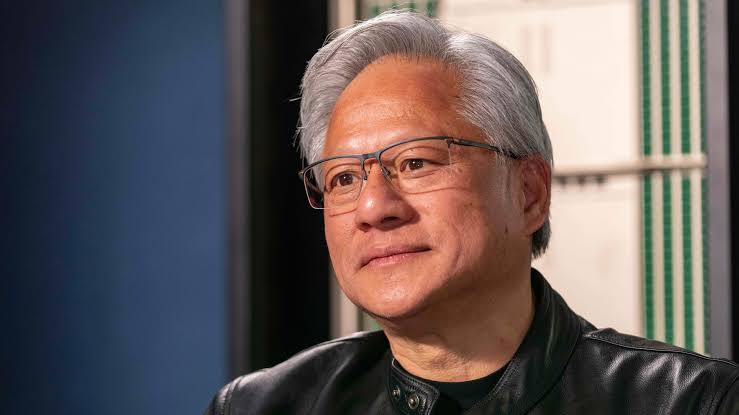
Silicon Valley has built an entire business culture around visionary founders, charismatic executives and larger-than-life personalities. But when one individual becomes bigger than the company itself, the question is no longer just who is leading the business. It is how much power one person should have over an entire industry.
Silicon Valley loves a superstar CEO.
The industry has spent decades turning technology executives into cultural icons. They are celebrated not simply for the companies they build, but for their personalities, ambitions, public statements and sometimes unconventional management styles. Their words move markets, their decisions influence thousands of employees, and their personal ambitions can shape the direction of entire industries.
From Steve Jobs to Elon Musk, the Valley has repeatedly embraced the idea that extraordinary companies require extraordinary individuals at the top.
There is an understandable appeal to this philosophy. Technology is built on bold ideas, calculated risks and the willingness to challenge established thinking. A founder with a clear vision can move faster than a committee, attract exceptional talent and persuade investors to finance ideas that initially seem impossible.
But somewhere along the way, Silicon Valley’s admiration for visionary leadership has evolved into something more complicated: a culture that sometimes struggles to distinguish between a company’s success and the personality of the person running it.
And that raises an uncomfortable question: When does strong leadership become too much power?
The founder becomes the brand
In traditional corporate culture, a CEO is expected to represent the company, oversee its strategy and answer to its board and shareholders. In Silicon Valley, however, the relationship between the executive and the company can become almost inseparable.
The founder is the product’s biggest ambassador, the company’s public identity and, occasionally, its most controversial spokesperson.
Consider Elon Musk. His public persona is deeply intertwined with the identities of Tesla and SpaceX. His ambitions have helped make electric vehicles, commercial spaceflight and ambitious technological projects part of mainstream business conversations.
But this concentration of attention also creates a business vulnerability. When investors, employees and customers begin associating an entire company with one personality, the executive’s personal decisions and public controversies can become corporate concerns.
The same phenomenon has appeared in different forms throughout the technology industry. Steve Jobs became synonymous with Apple’s design philosophy. Mark Zuckerberg remains closely associated with Meta’s strategic direction. Jensen Huang’s public identity is closely connected to Nvidia’s position in the artificial intelligence revolution.
These executives have become more than corporate managers. They are symbols of the technological future their companies promise to deliver.
That is powerful branding. It is also a concentration of influence that deserves scrutiny.
Why investors keep rewarding the superstar
The financial markets have their own reasons for embracing celebrity executives.
Investors often value predictability, and a founder with a recognizable vision can offer a compelling narrative about where a company is heading. A charismatic CEO can attract capital, recruit talent, negotiate partnerships and generate public excitement around new products.
For companies operating in rapidly changing industries, decisive leadership can be an advantage.
There is also a psychological element. Investors are not always buying into a business model alone; sometimes they are buying into the person selling the vision.
A founder who promises to transform transportation, artificial intelligence, social communication or space exploration can make an ambitious business proposition feel more tangible.
However, this creates a potential imbalance. When the market becomes too dependent on one executive’s reputation, questioning that person’s decisions can start to feel like questioning the entire company’s future.
That is not a healthy foundation for corporate accountability.
The employees rarely get the same power
There is another side to Silicon Valley’s superstar culture that receives considerably less attention: the people who actually build the products.
Technology companies depend on engineers, designers, researchers, sales teams, customer support workers and thousands of other employees whose contributions rarely receive the same public recognition as those of the CEO.
Yet when strategic decisions go wrong, employees are often among the first to experience the consequences.
Layoffs, restructuring, aggressive productivity targets and sudden changes in company direction can affect people’s livelihoods while the executive responsible for the strategy continues to command enormous influence.
This creates an uncomfortable contradiction in an industry that frequently celebrates disruption, innovation and human potential.
Silicon Valley talks about empowering individuals, but its corporate structures can place extraordinary authority in the hands of a remarkably small number of people.
The question is not whether CEOs should have the freedom to make difficult business decisions. They should. Companies must adapt, manage costs and respond to changing markets.
The question is whether employees, shareholders and boards have sufficient influence when those decisions are being made.
A company can be founder-led without becoming founder-controlled in every meaningful sense.
The danger of confusing vision with accountability
One of Silicon Valley’s most enduring beliefs is that visionary founders should be given room to operate without excessive interference.
There is merit to that argument. Some transformative ideas would never survive if every decision required approval from multiple committees.
But vision should not become an exemption from accountability.
Corporate boards exist to oversee management, protect shareholder interests and ensure that executives operate within appropriate governance structures. Their responsibility becomes particularly important when a CEO holds significant voting power or has an unusually close relationship with the board.
The issue is not whether a company should have a strong leader. It is whether the systems surrounding that leader are strong enough to challenge decisions, manage conflicts of interest and protect the long-term interests of the business.
Even successful founders need people around them who can disagree.
In fact, the bigger the company becomes, the more important independent oversight becomes.
Silicon Valley needs to rethink its definition of leadership
There is no reason to abandon the founder-led model. Silicon Valley owes much of its success to entrepreneurs willing to take extraordinary risks and pursue ideas that established industries once dismissed.
But the next generation of technology leadership should be measured by more than the ability to command attention, dominate headlines or convince investors to believe in an ambitious future.
It should also be measured by the ability to build institutions that function beyond one individual.
Can the company maintain its culture when its founder steps away? Can its board challenge executive decisions without fear? Can employees raise concerns without damaging their careers? Can the business survive a disagreement between its leadership and its shareholders?
These are not signs of weak leadership. They are tests of institutional strength.
A truly successful company should be bigger than its CEO.
The superstar CEO era needs a reality check
Silicon Valley will probably never stop celebrating its larger-than-life founders. The industry thrives on ambition, personality and the belief that a determined individual can change the world.
But admiration should not become unquestioning loyalty.
The technology industry has become too influential to operate on the assumption that one charismatic executive should automatically receive extraordinary freedom simply because they helped build a successful company.
Innovation requires visionaries. Sustainable businesses require accountability.
And perhaps the most important leadership lesson Silicon Valley needs to learn is that building a company capable of changing the world is impressive. Building one that does not depend on a single person’s authority to keep functioning is an even greater achievement.
The future of Silicon Valley should belong to great companies, not untouchable CEOs.