Silicon Valley Should Pay Attention: The Midterms Were Also a Referendum on the Future of Work
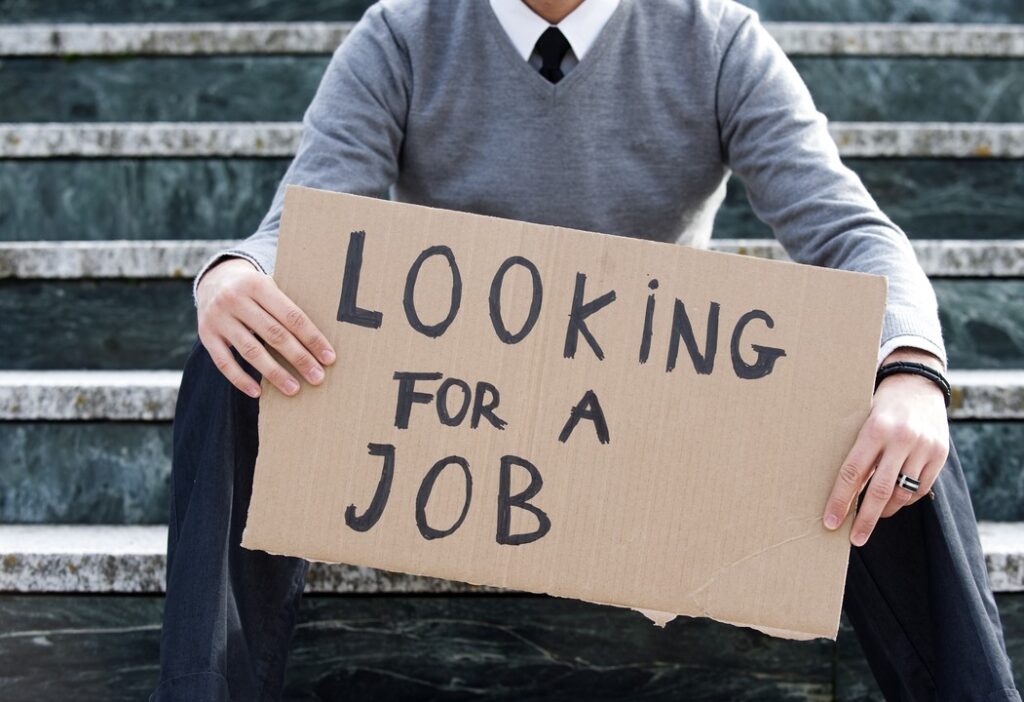
The technology industry has spent years celebrating efficiency, artificial intelligence and unprecedented corporate growth. But for the workers losing their jobs, the future looks considerably less exciting. The 2026 midterms offer Silicon Valley a warning: Americans are increasingly questioning an industry that appears to celebrate innovation while showing too little empathy for the people left behind.
Silicon Valley has become exceptionally good at selling the future. Artificial intelligence will transform industries, automation will improve productivity, and technology will unlock economic opportunities that previous generations could barely imagine.
There is just one problem: millions of workers are wondering whether they will have a place in that future.
The 2026 midterm elections should give the technology industry something to think about. While the results cannot be reduced to a single issue, voters sent a clear message about their economic anxieties, frustration with the direction of the country and expectations of political leadership. And Silicon Valley should recognize that some of those frustrations extend well beyond Washington.
According to a Pew Research Center survey conducted ahead of the elections, 84% of registered voters considered the economy very important to their midterm vote. Artificial intelligence was also an issue for 44% of voters. These figures suggest that Americans are thinking about more than political ideology. They are thinking about their financial security and what the future holds for their livelihoods.
For Silicon Valley, that should be a wake-up call.
When efficiency becomes an excuse for human consequences
The technology industry has developed a peculiar way of discussing job losses. Employees become headcount. Departments become operating costs. Layoffs become restructuring exercises. And thousands of livelihoods can disappear behind a carefully worded corporate announcement about efficiency.
The language is often remarkably detached from the human consequences.
For executives, reducing the workforce may be a strategic decision designed to improve margins, redirect investment or accelerate the adoption of artificial intelligence. For an employee who has spent a decade building a career inside a company, it can mean losing a source of income, professional identity, health insurance and financial stability almost overnight.
It can also mean competing in a job market where experienced professionals are discovering that their qualifications no longer guarantee employment.
A May 2026 report by the Los Angeles Times described how laid-off technology workers in California were struggling to find new positions despite having impressive professional backgrounds. Some were accepting lower salaries, others were leaving the industry, and some were reconsidering their entire careers.
This is not the glamorous version of Silicon Valley that makes it into investment presentations.
The industry celebrates the speed at which it can build new products, but it rarely demonstrates the same urgency when discussing how displaced workers are supposed to rebuild their lives.
Silicon Valley’s empathy problem
There is nothing inherently wrong with technological progress. Companies must innovate, compete and adapt. Artificial intelligence will undoubtedly create new opportunities, industries and businesses.
But innovation should not require the industry to become indifferent to the people whose livelihoods are disrupted along the way.
Silicon Valley has long promoted itself as a place where ambitious people can build something extraordinary. Its culture celebrates risk-taking, creativity, unconventional thinking and the courage to challenge established systems.
Yet when companies make decisions that affect thousands of employees, that celebrated entrepreneurial spirit can seem to disappear. Workers are often expected to accept restructuring as an unavoidable consequence of business evolution, even when they have spent years contributing to the company’s success.
The disconnect is becoming increasingly difficult to ignore.
An employee who helped build a profitable product, supported a company’s expansion or worked through years of demanding deadlines should not be treated as an insignificant operational expense when corporate priorities change.
Companies are entitled to make difficult commercial decisions. But they should also be expected to make those decisions responsibly.
Generous severance packages, meaningful career-transition support, transparent communication and adequate notice are not unreasonable demands. They are basic demonstrations of respect.
And perhaps most importantly, executives should stop discussing displaced workers as though they are simply an inconvenient statistic in the transition to a more automated economy.
The AI revolution needs a human story
The industry’s enthusiasm for artificial intelligence has intensified this problem.
As companies invest billions in AI infrastructure and automation, employees are increasingly being asked to demonstrate their value in an environment where the technology they are expected to embrace may eventually replace parts of their jobs.
This creates an uncomfortable contradiction. Workers are encouraged to become more productive using AI, while simultaneously facing uncertainty about whether that increased productivity will make their positions less necessary.
A Washington Post report in May 2026 highlighted how major technology companies were cutting jobs while making substantial investments in artificial intelligence. The relationship between AI adoption and every individual layoff is not always straightforward, and companies should not use AI as a convenient explanation for every workforce reduction.
Nevertheless, the direction of travel is difficult to dismiss.
The Los Angeles Times also reported in July that technology workers themselves were beginning to protest the AI race, citing concerns about employment, workplace pressure and the broader consequences of increasingly powerful systems.
These are not necessarily people opposed to technology. Many helped create it.
They understand its potential, but they also understand what can happen when commercial ambitions move faster than the industry’s willingness to address the consequences.
The question is no longer simply whether AI can replace certain tasks. It is whether the economic benefits of AI will be shared broadly or concentrated among the companies and investors that own the technology.
That is a political question as much as a technological one.
Voters are beginning to question who benefits from the technology boom
One of the more interesting developments surrounding the midterms is the growing public skepticism toward parts of the technology industry’s expansion.
Pew Research Center found that 61% of registered voters disliked political leaders who supported building data centers in areas near them. Only 8% expressed a positive view of such leaders.
Although this finding concerns data center development rather than layoffs specifically, it reveals something important: Americans are increasingly asking what they actually receive in return for accommodating the technology industry’s ambitions.
Communities are being asked to accommodate enormous infrastructure projects, increased electricity demand and substantial resource consumption. Meanwhile, the promise of local employment and economic benefits is not always convincing.
The same question applies to the workforce.
If AI makes companies more profitable, who benefits? If automation reduces operating costs, where do those savings go? If technology eliminates certain jobs, what responsibility does the industry have toward the people affected?
These questions are not anti-technology. They are questions about economic fairness.
And they are becoming increasingly difficult for politicians to ignore.
Silicon Valley cannot build the future while disregarding the people living in the present
The technology industry should be careful about interpreting political dissatisfaction as hostility toward innovation.
Americans are not necessarily asking companies to abandon artificial intelligence, stop automating processes or preserve every job indefinitely. Businesses need the freedom to evolve.
What people are asking for is a more responsible relationship between corporate success and human welfare.
That means acknowledging that workers are not disposable simply because a new technology makes certain positions less profitable. It means investing in retraining before displacement becomes unavoidable, providing meaningful transition assistance and creating pathways for younger professionals who are finding it increasingly difficult to enter the industry.
It also means recognizing that the people who built Silicon Valley deserve consideration when Silicon Valley changes direction.
For the industry’s leaders, this is not simply a public relations challenge. It is a question of long-term trust.
Technology companies depend on public confidence, talented employees, customers, investors and communities willing to support their growth. An industry that becomes associated with extraordinary wealth creation at the top and growing insecurity everywhere else risks undermining that support.
The next innovation should be corporate empathy
Silicon Valley has repeatedly demonstrated that it can solve problems once considered impossible. It has transformed communication, transportation, finance, healthcare and entertainment.
But it now faces a different kind of challenge: demonstrating that technological progress and human dignity can coexist.
The 2026 midterms were not exclusively a referendum on artificial intelligence or Silicon Valley. The economy, healthcare, democracy and other concerns shaped voters’ decisions. But the results emerged against a backdrop of growing unease about the future of work, and the technology industry would be foolish to ignore that context.
The next generation of successful technology companies should be judged not only by their valuation, their AI capabilities or how many processes they can automate.
They should also be judged by how they treat the people who helped make their success possible.
Silicon Valley likes to talk about building a better future. Perhaps it is time to demonstrate that it cares about the people who will have to live in it.
Innovation without empathy is not progress. It is simply efficiency without responsibility.