From Eisenhower to Trump: How Presidents Shaped the Kennedy Center – and Why This Moment Is Different
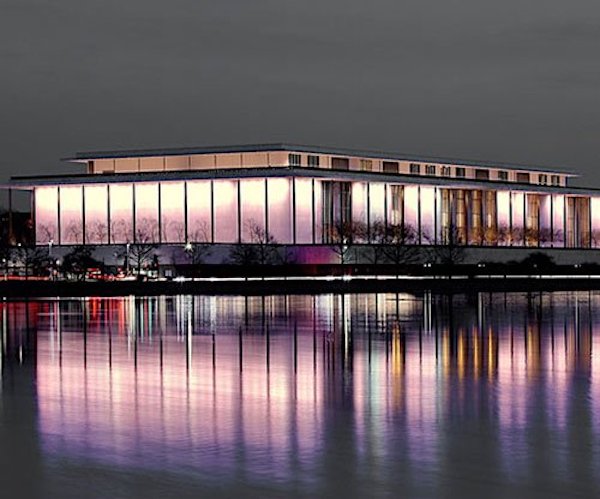
The Kennedy Center has always had a relationship with the White House.
That is not new.
What is unusual is how directly the institution’s identity has become intertwined with one president’s personal leadership and political agenda.
Eisenhower: The dream
The story begins with President Dwight D. Eisenhower.
In 1955, Eisenhower established a commission to explore the creation of a national cultural center in Washington. In 1958, he signed the National Cultural Center Act into law.
His vision was not to create a presidential clubhouse but an artistic center that would be a permanent home for American cultural life.
The federal government helped create the institution, but the purpose was to create something that could outlast the government that created it.
Kennedy: Culture as part of American leadership
John F. Kennedy took the project further.
In 1962, Kennedy and Jacqueline Kennedy led a major fundraising effort for the center. Kennedy personally used his presidency to promote the idea that the arts were important to American democracy and national life.
At a 1962 fundraising event, Kennedy spoke about art as an instrument of understanding rather than simply a political weapon.
Kennedy saw cultural achievement as part of America’s identity.
Then, after his assassination, the institution was renamed in his honor and designated a living memorial.
Johnson: Making Kennedy’s vision permanent
Lyndon B. Johnson played an enormous role in turning the memorial into reality.
Congress renamed the National Cultural Center the John F. Kennedy Center for the Performing Arts in January 1964. Johnson signed the legislation and later broke ground for the building.
The idea was not to create a museum dedicated to remembering Kennedy.
It was to create a living institution.
As Johnson said at the time, the institution would honor Kennedy while enriching American life through art.
Nixon: Opening the doors
Richard Nixon inherited a project that had begun under a Republican president, been championed by a Democratic president and legislated into existence under another Democratic president.
He opened it.
The Kennedy Center officially opened in September 1971, with Leonard Bernstein’s Mass as its inaugural production. Nixon described the opening as the fulfillment of a dream shared by Americans.
That is perhaps the most revealing part of the early history.
Four presidents. One institution.
Different administrations, different political circumstances, but the project survived.
And then it became something larger than any of them.
For decades, presidents came and went
That pattern continued for more than 50 years.
Presidents appeared at Kennedy Center events. They participated in the Kennedy Center Honors. Their administrations interacted with the institution.
But the center accumulated a cultural history that was far larger than the presidency.
Its stages belonged to artists.
Its audiences came from across the country.
Its honors celebrated musicians, actors, dancers, composers and performers.
The Kennedy Center became part of America’s cultural infrastructure.
And that is where the Trump era creates a stark historical contrast.
Trump: From presidential relationship to presidential control
Trump’s intervention began in a fundamentally different way.
In February 2025, Trump announced plans to overhaul the Kennedy Center board and make himself chairman. He subsequently became chairman after a reconstituted board voted him into the position. His administration also replaced Kennedy Center president Deborah Rutter with Richard Grenell.
Artists responded.
This move led artists to cancel performances. Others resigned from advisory or board positions.
More than 20 productions were reported cancelled or postponed during the early backlash, with Hamilton among the prominent productions that withdrew.
Trump says he is rescuing the institution
There is also another side that needs to be acknowledged.
Trump and his supporters have argued that the Kennedy Center had become too political and that his intervention was intended to change its direction, improve its finances and restore what they regard as a more traditional or patriotic cultural program.
Trump has also claimed credit for securing substantial federal funding for renovations.
So the story isn’t simply that Trump became involved with the Kennedy Center.
It is that he and his allies have sought to redefine what the institution is and what it represents.
And that is where the backlash comes from
For many artists, the concern is institutional.
Who controls the national stage?
Who determines the artistic direction?
Does a national cultural institution serve the administration of the day, or does it serve a cultural mission that survives administrations?
Those are legitimate historical questions.
And artists’ responses demonstrate how seriously some performers regard them.
The name change makes the contrast even sharper
The controversy became even more symbolic when Trump’s name was added to the building.
That is particularly striking because the institution was created as a living memorial to John F. Kennedy.
In 2026, a federal judge ruled that adding Trump’s name was unlawful, and the dispute has continued. Trump’s supporters have argued that his role in securing funding and restoring the institution justifies recognition.
The question America should be asking
The most interesting question isn’t whether Trump has the right to reshape the Kennedy Center.
It is what kind of institution America wants the Kennedy Center to be.
A presidential institution?
A government institution?
A political institution?
Or a national home for the performing arts that happens to exist in the nation’s capital?
Its history strongly supports the last idea.
And that is why the current moment feels so different.
Eisenhower helped create the dream. Kennedy gave it cultural purpose. Johnson made it a living memorial. Nixon opened its doors. Generations of artists gave it its soul.
Trump has made himself central to its leadership and identity in a way that has generated an unusually intense artistic and institutional backlash.
The question now is whether the Kennedy Center’s next chapter will be remembered primarily for the president who reshaped it or for the artists who continued to perform there.
History has already given us the answer to what makes the institution last: presidents build the framework. Artists make the culture.